
High-risk pregnancy: What does it mean and when are extra scans needed
Being told you have a high-risk pregnancy can sound worrying, but it does not automatically mean that something is wrong with you or your baby.
Pregnancy risk is assessed throughout pregnancy rather than decided by one test or one appointment. Your maternity team will look at your medical history, previous pregnancies, your current health and how your pregnancy is progressing to decide whether you need any additional monitoring or care. NICE guidance on antenatal care recommends ongoing risk assessment as part of routine maternity care.
So if you have been told your pregnancy needs closer monitoring, the most useful question is often not simply, “Why am I high risk?” but “What has increased the level of monitoring, and what does that mean for my care?”
How is pregnancy risk assessed?
There is no single test that determines whether a pregnancy is high risk. At your booking appointment, your midwife or doctor will ask about your health, previous pregnancies, family history and other factors that may affect pregnancy. This assessment continues as your pregnancy progresses because circumstances can change.
For example, someone may start pregnancy with no particular concerns and later need additional monitoring because of raised blood pressure, concerns about fetal growth or gestational diabetes.
This is why being described as higher risk is not necessarily a permanent label. It is about making sure the right level of care is in place for what is happening at that point in your pregnancy.
What can make a pregnancy higher risk?
There are several reasons why your maternity team may recommend additional care. Sometimes there is one clear reason. In other cases, several factors are considered together.
Your health before or during pregnancy
Some health conditions can affect pregnancy and may mean you need additional monitoring. These can include diabetes, high blood pressure, kidney disease, heart conditions, autoimmune conditions or other long-term health conditions.
Your medication may also need to be reviewed during pregnancy to make sure it remains appropriate. This does not mean that having a medical condition automatically makes a pregnancy complicated. Your maternity team will consider your individual circumstances and the level of risk involved.
Your previous pregnancy history
What happened in a previous pregnancy can also be relevant. For example, a previous pregnancy affected by pre-eclampsia, fetal growth restriction, stillbirth or preterm birth may mean your maternity team pays closer attention to certain aspects of a subsequent pregnancy.
However, having experienced a complication before does not mean that it will happen again. Your previous history is one part of the overall risk assessment.
What is happening in your current pregnancy?
Sometimes the reason for additional care develops during pregnancy. Your maternity team may want to monitor things such as blood pressure, gestational diabetes, fetal growth, amniotic fluid levels or findings from an ultrasound scan.
If a concern is identified, the type of monitoring you need will depend on what has been found. This might involve additional antenatal appointments, blood tests, ultrasound scans or review by an obstetric team.
The important point is that extra monitoring is there for a reason. It is not simply a sign that something is going badly.
Can age affect pregnancy risk?
Age can be one factor considered when assessing pregnancy risk, but it is looked at alongside other factors rather than in isolation.
For example, NICE identifies age 40 or older as one of the factors associated with an increased risk of pre-eclampsia. Other factors include having your first baby, having a higher BMI, a family history of pre-eclampsia, a long gap between pregnancies or expecting more than one baby. NICE guidance on hypertension in pregnancy sets out the factors considered when assessing risk.
So there is not a separate set of tests that automatically applies simply because someone reaches a particular age. Your overall circumstances matter.
Can a pregnancy become higher risk later?
Yes. Pregnancy is monitored over time, so the level of care can change if new information comes to light.
For example, your blood pressure may become raised later in pregnancy or your maternity team may have concerns about how your baby is growing.
This can mean moving from routine antenatal care to additional monitoring. It does not necessarily mean there is a serious problem. Sometimes it simply means your maternity team wants more information so they can make appropriate decisions about your care.
Does a high-risk pregnancy mean you will need more scans?
Sometimes, but there is no standard number of scans for every high risk pregnancy. If there are concerns about fetal growth, for example, you may be offered additional ultrasound scans to measure your baby’s growth and assess other features such as amniotic fluid or blood flow.
Other situations may require different types of monitoring instead, such as blood pressure checks, blood tests, medication reviews or additional appointments with an obstetric team.
More scans are not automatically better. What matters is what the scan is being used to assess and how the information will contribute to your care. If you have been offered additional scans, it is reasonable to ask your maternity team what they are monitoring and what they are looking for.
What does obstetric-led care mean?
If your pregnancy needs more specialist monitoring, you may receive obstetric-led care. An obstetrician is a doctor who specialises in pregnancy, childbirth and conditions that can affect pregnancy. Depending on your circumstances, your care may involve your midwife, obstetric team or another specialist service.
Being under obstetric care does not automatically mean you will have an early birth or a caesarean section. Decisions about birth depend on your individual circumstances and how your pregnancy progresses. If your care changes, ask what has prompted the change and what it means for your antenatal appointments, monitoring and plans for birth.
Can being higher risk affect where or when you give birth?
Sometimes.
The condition affecting your pregnancy, how significant the risk is and how your pregnancy progresses can all influence recommendations about where and when you give birth. For some people, additional monitoring continues without changing their planned birth arrangements. For others, the balance of risks may mean that a hospital birth or a particular timing of birth is recommended.
A high-risk pregnancy does not automatically mean an early birth or caesarean section. Your maternity team should explain the reasons behind any recommendations and discuss your preferences where appropriate.
Where does private ultrasound fit in?
Private ultrasound can sit alongside NHS maternity care, but it does not replace it. If your NHS team has recommended additional growth scans or other clinical monitoring, those appointments remain important. A private scan should not be used instead of NHS assessment, screening, obstetric review or specialist care where these are needed.
There can still be a place for private ultrasound if you want additional information within the scope of the scan being offered.
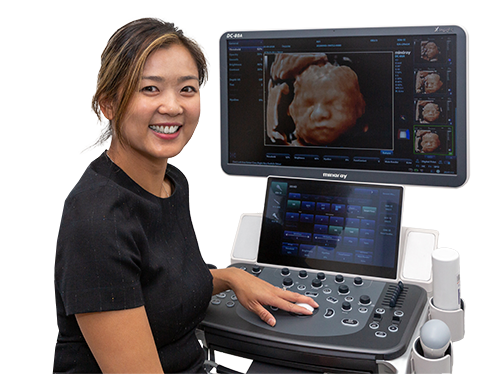
For example, our 4D and growth scan includes measurements of your baby’s head, abdomen and femur, an estimated fetal weight, an assessment of amniotic fluid and an umbilical artery Doppler assessment. The exact purpose and limitations of any private scan should always be clear.
If a scan identifies something that needs medical assessment, the appropriate next step may be to speak to your midwife, maternity team, GP or hospital service rather than simply arranging another private scan.
What about screening for Down’s, Edwards’ and Patau’s syndromes?
Screening is another part of pregnancy care that can sometimes be confused with risk assessment.
NHS pregnancy screening includes screening for Down’s syndrome, Edwards’ syndrome and Patau’s syndrome. The combined test usually takes place between 10 and 14 weeks and combines a blood test with an ultrasound measurement. Screening estimates the chance of a condition, rather than confirming whether a baby has it. NHS guidance on screening for Down’s, Edwards’ and Patau’s syndromes explains what the different results mean and what options may be available afterwards. NIPT can also be accessed privately.
At Yorkshire Baby Scan, we offer NIPT and scan from 10 weeks of pregnancy, screening for Down’s syndrome, Edwards’ syndrome and Patau’s syndrome. Our NIPT and scan service combines the blood test with an ultrasound appointment.
NIPT is a screening test rather than a diagnostic test, so if your result suggests a higher chance of one of these conditions, you should discuss this with your midwife or maternity team as further testing may be recommended.
What should you do if you are told your pregnancy is high risk?
The phrase itself does not tell you very much. The reason behind the higher level of risk is much more useful.
Ask your maternity team:
- What has made my pregnancy higher risk?
- What additional monitoring or appointments do I need?
- What are the extra scans or tests checking for?
- Has anything changed about where or when I may give birth?
You do not need to understand every medical term at your appointment. Asking your maternity team to explain what they are monitoring and why can make the plan much easier to follow.
The bottom line
A high-risk pregnancy is not a diagnosis in itself, and it does not automatically mean that something is wrong or that you will need lots of scans.
Pregnancy risk is assessed throughout pregnancy, taking into account your health, previous pregnancy history and what is happening now. Additional care might include more antenatal appointments, ultrasound scans, Doppler assessments, blood tests or obstetric review, depending on the reason for the increased level of monitoring.
Private ultrasound can provide additional information within the scope of the scan, but it should sit alongside NHS maternity care rather than replace it. If you have been told that your pregnancy is higher risk, the most useful starting point is to understand what has increased the level of monitoring and what that means for your individual care.
Article information
References
Disclaimer
Important information
The information in this blog is provided for general information only. It is not intended to provide individual clinical advice, diagnosis or treatment and should not replace advice from your midwife, GP, maternity team, dentist or other appropriate healthcare professional.
Every pregnancy is different. If you have been given individual medical advice, please follow the guidance provided by your own healthcare team. If you have concerns about your health, your pregnancy or your baby’s wellbeing, seek appropriate medical advice rather than relying on information in this newsletter/blog etc.
Yorkshire Baby Scan is not an emergency service
Yorkshire Baby Scan is not an emergency or urgent medical service. Our scans and appointments are not a substitute for NHS maternity or emergency care.
If you have an urgent concern during pregnancy, contact your midwife or maternity unit, or the appropriate NHS service for your stage of pregnancy. If you are unsure where to seek help, contact NHS 111.
If you think you are experiencing a life-threatening emergency, call 999 immediately. (nhs.uk)
If you notice a change in your baby’s usual movements, do not wait for a scan appointment or until the next day. Contact your midwife or maternity unit immediately. (nhs.uk)
Information and review
We take reasonable steps to ensure that the information provided is accurate and based on current guidance at the time of publication. Healthcare guidance, legislation and available services can change, so information should be checked against current official guidance where appropriate.
Enjoyed this article or want to know more?
Book your scan today
See your baby’s first moments and create memories that last a lifetime. Book your private scan today and enjoy peace of mind from the very start of your journey.