
From two lines to heartbeat: How your baby develops in early pregnancy
A positive pregnancy test marks the start of an incredible journey. Those two lines are more than confirmation, they signal the beginning of your baby’s earliest development. In the first few weeks, a tiny cluster of cells begins to form structures that will eventually become a fully formed foetus. Understanding what happens between that first positive test and the first detectable heartbeat can help you follow this remarkable process week by week.
Weeks 3-4: Fertilisation and implantation
Shortly after fertilisation the single-cell embryo starts dividing rapidly. By around week 3, it becomes a blastocyst, a small ball of cells that travels down the fallopian tube and implants into the uterine lining. Implantation may cause very light spotting or cramping, but it is mostly silent, with the embryo beginning to establish connections with the mother’s blood supply.
Week 5: Formation of the gestational sac and two lines
By week 5, a gestational sac has formed within the uterus, one of the first things visible on an ultrasound. Around this time, the positive pregnancy test shows rising hCG levels, producing those two lines that confirm implantation. Inside the sac, a tiny yolk sac develops to provide early nutrients while the placenta begins to take shape.
Week 6: Emergence of the heart tube
At week 6, the embryo is roughly the size of a lentil, but critical developments are underway. The heart begins as a simple tube, which will soon start rhythmic contractions. While the heartbeat may not yet be visible on a scan, this is when cardiac activity begins at a cellular level. The neural tube, which will become the brain and spinal cord, is also forming during this period.
Week 7: First detectable heartbeat
By week 7, many embryos have reached the stage where a heartbeat can be seen on an ultrasound. The heart tube has folded and started forming chambers and electrical impulses produce the first coordinated beats. At this stage the embryo measures around 5-10 millimetres and other early organs such as the liver and kidneys are beginning to develop. Limb buds are also forming, showing the first hints of arms and legs.
Week 8: Rapid growth and refinement
Around week 8, the embryo enters the final stage of the embryonic period and is now considered a foetus. Facial features begin to form, fingers and toes start to differentiate, and the brain continues its rapid growth. The heartbeat, now well established, provides a reliable indicator of the foetus’s viability and early development.
Observing early development
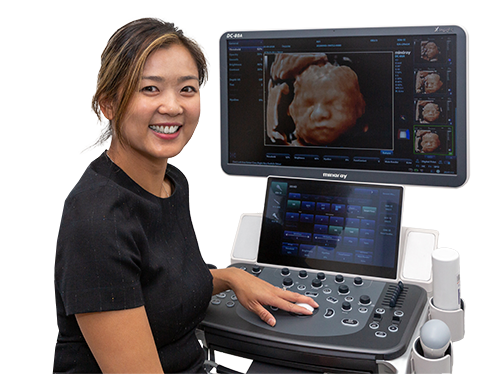
While the period from a positive test to the first heartbeat is brief it is packed with extraordinary cellular activity and organ formation. At Yorkshire Baby Scan we offer early pregnancy scans that let you see these developments for yourself and provide a visual reference alongside routine clinical checks.
You can read more about each stage of development here.
Article information
References
Disclaimer
Important information
The information in this blog is provided for general information only. It is not intended to provide individual clinical advice, diagnosis or treatment and should not replace advice from your midwife, GP, maternity team, dentist or other appropriate healthcare professional.
Every pregnancy is different. If you have been given individual medical advice, please follow the guidance provided by your own healthcare team. If you have concerns about your health, your pregnancy or your baby’s wellbeing, seek appropriate medical advice rather than relying on information in this newsletter/blog etc.
Yorkshire Baby Scan is not an emergency service
Yorkshire Baby Scan is not an emergency or urgent medical service. Our scans and appointments are not a substitute for NHS maternity or emergency care.
If you have an urgent concern during pregnancy, contact your midwife or maternity unit, or the appropriate NHS service for your stage of pregnancy. If you are unsure where to seek help, contact NHS 111.
If you think you are experiencing a life-threatening emergency, call 999 immediately. (nhs.uk)
If you notice a change in your baby’s usual movements, do not wait for a scan appointment or until the next day. Contact your midwife or maternity unit immediately. (nhs.uk)
Information and review
We take reasonable steps to ensure that the information provided is accurate and based on current guidance at the time of publication. Healthcare guidance, legislation and available services can change, so information should be checked against current official guidance where appropriate.
Enjoyed this article or want to know more?
Book your scan today
See your baby’s first moments and create memories that last a lifetime. Book your private scan today and enjoy peace of mind from the very start of your journey.