Tip 3: Choose comfort where you can
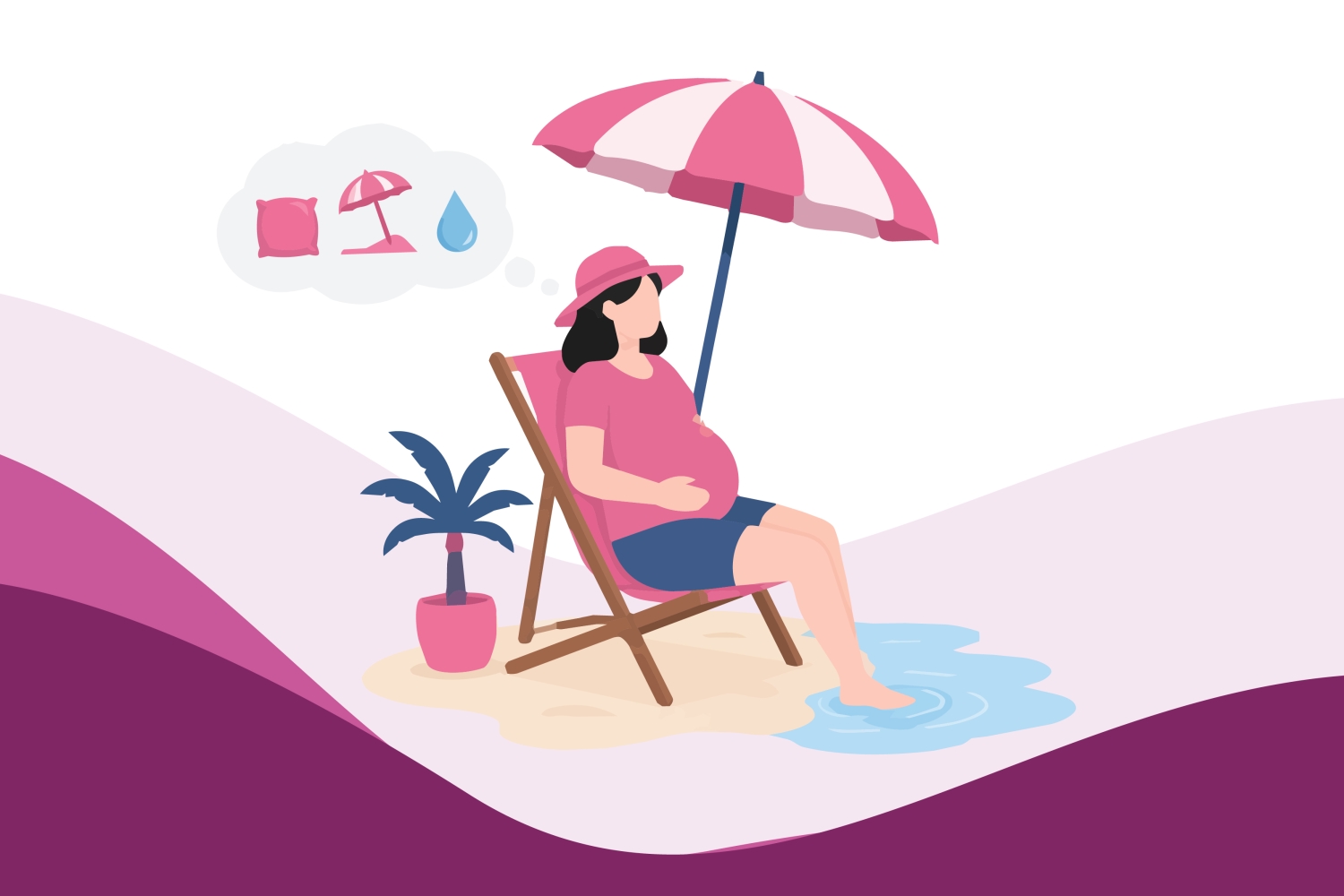
Water, shade and gentle activity can help your body feel more supported during pregnancy, especially when routines and surroundings change. During pregnancy, it is not only what you do that matters but also the environment you are in and how easily your body can rest and recover during the day.
Why different environments feel different during pregnancy
As pregnancy progresses, changes in posture, weight distribution and balance can make everyday environments feel slightly different from before. This can become more noticeable during holidays or days out when you may be walking more, standing for longer or spending time in unfamiliar surroundings. Some activities that previously felt easy, such as walking on sand, standing on uneven ground or exploring hilly areas, may require more effort. This is often linked to natural changes in your centre of gravity rather than a reduction in fitness.
Why water often feels more comfortable
Water is one of the most supportive environments for the body during pregnancy. Because it helps support body weight, movement in a pool or shallow water can feel easier on joints and muscles compared to being on land. Many people find that activities such as gentle swimming or simply being in water feel more comfortable than walking or standing for long periods. This is due to buoyancy reducing pressure on the body, which can temporarily make movement feel lighter.
The role of shade, rest and pacing
Warm, busy or unfamiliar environments can make it easier to feel tired without realising it. Shade, seating and regular rest points allow the body to recover more effectively throughout the day. Comfort during pregnancy is not about avoiding activity, but about making sure your body has space to pause when needed. Even short breaks can make a noticeable difference when spending longer periods out of the house. In warmer weather, simple steps such as seeking shade, wearing light clothing and using sun protection can also help reduce the strain of spending longer periods outdoors. Some people also find it helpful to bring simple comfort items when spending a full day out. A small travel pillow, cushion or supportive footwear can help with sitting comfort and posture, particularly later in pregnancy when back and pelvic support becomes more important. These small adjustments can make long days feel more manageable without changing what you are able to do.
Activity and movement still matter
Light movement is still beneficial during pregnancy and is encouraged as part of staying healthy. The key difference is choosing environments where activity feels sustainable rather than tiring. For example, walking in flatter areas with regular places to rest may feel more comfortable than uneven or steep routes, especially later in pregnancy.
Why paying attention to comfort is helpful
As pregnancy progresses, your body naturally works harder due to changes in circulation, posture and weight distribution. This means fatigue can build more quickly during long days, especially when routines change during holidays or time away from home. Being aware of comfort levels helps you adjust activity in real time rather than pushing through tiredness. This can make days out more enjoyable and less physically draining. Travel can also make pregnancy feel slightly different in ways that are completely normal. For example, some people notice their baby seems quieter during a long journey and becomes more active after arriving. The steady movement and vibration of travel can sometimes have a soothing effect, which may influence how movement patterns are perceived during travel. If you are ever concerned about your baby’s movements, you should contact your maternity team for advice.
Final thoughts
Choosing comfortable environments during pregnancy is about supporting your body rather than limiting what you do. Water, shade, gentle activity and small comfort adjustments can all help make everyday experiences feel easier as your pregnancy progresses. If you ever feel unsure about how your body is responding to activity or environment changes, you should contact your midwife or maternity team for advice.
Article information
Disclaimer
Important information
The information in this blog is provided for general information only. It is not intended to provide individual clinical advice, diagnosis or treatment and should not replace advice from your midwife, GP, maternity team, dentist or other appropriate healthcare professional.
Every pregnancy is different. If you have been given individual medical advice, please follow the guidance provided by your own healthcare team. If you have concerns about your health, your pregnancy or your baby’s wellbeing, seek appropriate medical advice rather than relying on information in this newsletter/blog etc.
Yorkshire Baby Scan is not an emergency service
Yorkshire Baby Scan is not an emergency or urgent medical service. Our scans and appointments are not a substitute for NHS maternity or emergency care.
If you have an urgent concern during pregnancy, contact your midwife or maternity unit, or the appropriate NHS service for your stage of pregnancy. If you are unsure where to seek help, contact NHS 111.
If you think you are experiencing a life-threatening emergency, call 999 immediately. (nhs.uk)
If you notice a change in your baby’s usual movements, do not wait for a scan appointment or until the next day. Contact your midwife or maternity unit immediately. (nhs.uk)
Information and review
We take reasonable steps to ensure that the information provided is accurate and based on current guidance at the time of publication. Healthcare guidance, legislation and available services can change, so information should be checked against current official guidance where appropriate.
Enjoyed this article or want to know more?
Book your scan today
See your baby’s first moments and create memories that last a lifetime. Book your private scan today and enjoy peace of mind from the very start of your journey.