Tip 1: Sleep more comfortably as your pregnancy progresses
Getting comfortable at bedtime can become more difficult as your pregnancy progresses. Your bump grows, your usual sleeping position may no longer feel quite right and aches, trips to the toilet or simply having more on your mind can make a good night’s sleep harder to come by.
If you’ve been wondering whether you should sleep on your left side, right side or back, you’re certainly not the only one.
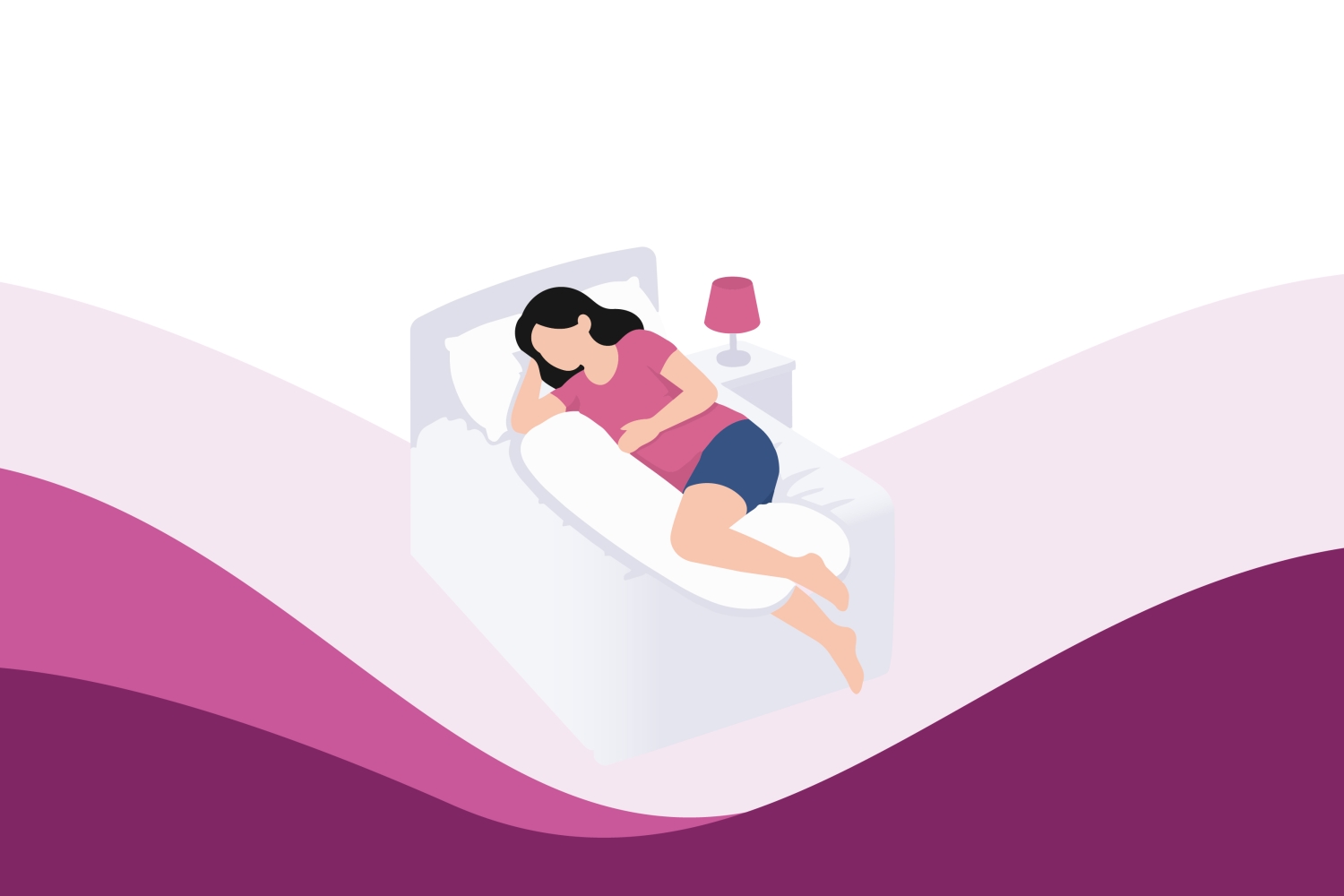
The important thing to know is that you do not need to spend the whole night trying to stay in one exact position. From 28 weeks of pregnancy, NHS guidance recommends going to sleep on your side, either your left or right side. This applies when you go to sleep at night, when you return to sleep after waking and when you settle down for a daytime nap.
Why can sleeping become harder during pregnancy?
Sleep can change for lots of ordinary reasons as your pregnancy develops.
In the first few months, hormonal changes can leave you feeling particularly tired. As your pregnancy progresses, your growing bump can make your usual sleeping position less comfortable. You may also find that your back, hips or ribs feel different when you have been lying in one position for a while.
There are other distractions too. Needing to get up to use the toilet more often, feeling your baby move or simply finding it harder to settle can all interrupt your night. The NHS notes that tiredness is particularly common in early pregnancy, while later pregnancy can bring extra weight, a growing bump and more frequent trips to the toilet.
Rather than expecting your sleep to stay exactly the same throughout pregnancy, it can be more useful to adapt your routine and sleeping position as your body changes.
How your sleep may change as pregnancy progresses
Your sleeping position does not need to be complicated. What feels comfortable can change as your pregnancy progresses, while the specific advice about going to sleep on your side becomes more relevant later on.
First trimester
In the first trimester, sleep in whichever position feels comfortable. Your bump is still small and there is no need to make yourself sleep on your side if that is not your natural position. You may find that tiredness is actually one of the main challenges at this stage, with hormonal changes making you feel more exhausted than usual.
Getting enough rest can be difficult when you are dealing with nausea, tiredness or changes in your usual routine, so give yourself permission to rest when you need it.
Second trimester
As your bump grows, you may naturally find that lying on your front becomes less comfortable and that sleeping on your side feels easier. This can be a good time to experiment with different ways of supporting your body. A pillow between your knees or under your bump may make sleeping more comfortable.
There is no single pillow arrangement that works for everyone. The aim is simply to find a position that supports you without making bedtime feel like another task to get right.
Third trimester
From 28 weeks, the advice changes slightly. The NHS recommends going to sleep on your side rather than your back, and either your left or right side is fine. The same advice applies when you return to sleep after waking during the night and when you have a daytime nap.
Research has linked going to sleep on your back after 28 weeks can increase the risk of stillbirth. Researchers believe this may be related to pressure from the baby and womb affecting blood flow and oxygen reaching the baby and placenta.
The important point is that the guidance is about the position you settle into when you go to sleep, rather than trying to control your position throughout the night.
Do you have to sleep on your left side?
No.
This is one of the most common questions about sleeping in pregnancy, partly because advice about the left side has been shared for many years.
The left side is fine, but there is no need to choose the left side over the right. Tommy’s latest clinical review notes that although one study found a possible difference between left- and right-side sleeping, other research has not consistently found the same result.
So if your right side is more comfortable, you can sleep on your right. If you prefer your left, that is fine too. From 28 weeks, the key advice is simply to settle to sleep on your side.
What if you wake up on your back?
This is another area where it is easy to put unnecessary pressure on yourself. You might go to sleep on your side and wake up to discover that you have moved onto your back. That does not mean you have done anything wrong.
The research focuses on the position you go to sleep in rather than trying to control your position throughout the night. It is normal to move during sleep, so you do not need to try to control your position throughout the night. If you wake up on your back, simply turn onto your side and go back to sleep.
How to make side sleeping more comfortable
Knowing that side sleeping is recommended is one thing. Actually getting comfortable in that position can be another.
A few simple adjustments may make a difference:
- Place a pillow between your knees if this feels more comfortable for your hips and legs.
- Try a pillow under your bump if you would like some extra support.
- Put a pillow behind your back if this helps you feel more settled on your side.
- Change from one side to the other if one position becomes uncomfortable.
- Make sure your head and neck are comfortably supported.
You do not need a specialist pregnancy pillow. Regular pillows can be used to support your body, although some people prefer a longer pregnancy pillow as their bump grows. NHS guidance also suggests using pillows under the bump and between the knees.
If you have pelvic girdle pain or another condition that makes side sleeping particularly uncomfortable, speak to your midwife or maternity team. They can advise you on ways to manage your individual symptoms.
What if side sleeping is uncomfortable?
Side sleeping can take some getting used to, particularly if you have always slept on your back. Try making small changes rather than expecting yourself to find the perfect position straight away. Supporting your bump or placing a pillow between your legs may make the position easier to maintain. You can also change from one side to the other during the night. There is no need to remain on the same side until morning.
If pain is regularly making it difficult to sleep, particularly if you have significant back or pelvic pain, speak to your midwife, GP or maternity team. Persistent discomfort is worth discussing rather than simply putting up with it.
Making bedtime more comfortable
Your sleeping position is only one part of getting a decent night’s rest. If you are struggling to sleep, it can be worth looking at your wider bedtime routine too. Giving yourself time to wind down before bed, keeping your bedroom comfortable and finding ways to relax can all support better sleep.
The NHS suggests relaxation techniques and avoiding tea, coffee or cola drinks in the evening if caffeine is making it harder to sleep. Staying active during the day may also help with tiredness and sleep.
You do not need to aim for a perfect night’s sleep. Pregnancy can make that difficult, particularly as your bump grows. The aim is to make your nights as comfortable and manageable as possible.
When should you speak to your midwife or GP?
Poor sleep is common in pregnancy, but you do not have to struggle with it without support. Speak to your midwife or GP if lack of sleep is regularly affecting you or if pain is making it difficult to rest. The NHS also advises speaking to a healthcare professional if sleeplessness is accompanied by other symptoms of depression, such as feeling hopeless or losing interest in things you usually enjoy.
If you have been given specific advice because of your individual pregnancy or a medical condition, follow the guidance from your own maternity team.
If you are worried about your baby’s movements
Sleep position is only one part of keeping your baby well. If you notice that your baby’s movements are less than usual, feel weaker than usual or have stopped, contact your midwife or maternity team immediately. Do not wait until the next day.
A final thought
Sleep can be unpredictable as your pregnancy progresses, so there is no need to expect every night to be perfect. From 28 weeks, the key advice is to settle to sleep on your side, either left or right, and if you wake up on your back, simply turn onto your side and go back to sleep.
Every pregnancy is different, and advice can sometimes seem to vary depending on where you read it or who you speak to. If you have concerns about your sleep or have been given individual advice by your maternity team, speak to them so you can understand what is appropriate for you.
Article information
References
Disclaimer
Important information
The information in this blog is provided for general information only. It is not intended to provide individual clinical advice, diagnosis or treatment and should not replace advice from your midwife, GP, maternity team, dentist or other appropriate healthcare professional.
Every pregnancy is different. If you have been given individual medical advice, please follow the guidance provided by your own healthcare team. If you have concerns about your health, your pregnancy or your baby’s wellbeing, seek appropriate medical advice rather than relying on information in this newsletter/blog etc.
Yorkshire Baby Scan is not an emergency service
Yorkshire Baby Scan is not an emergency or urgent medical service. Our scans and appointments are not a substitute for NHS maternity or emergency care.
If you have an urgent concern during pregnancy, contact your midwife or maternity unit, or the appropriate NHS service for your stage of pregnancy. If you are unsure where to seek help, contact NHS 111.
If you think you are experiencing a life-threatening emergency, call 999 immediately. (nhs.uk)
If you notice a change in your baby’s usual movements, do not wait for a scan appointment or until the next day. Contact your midwife or maternity unit immediately. (nhs.uk)
Information and review
We take reasonable steps to ensure that the information provided is accurate and based on current guidance at the time of publication. Healthcare guidance, legislation and available services can change, so information should be checked against current official guidance where appropriate.
Enjoyed this article or want to know more?
Book your scan today
See your baby’s first moments and create memories that last a lifetime. Book your private scan today and enjoy peace of mind from the very start of your journey.