Stay hydrated
Hydration is a simple but often overlooked part of supporting overall health during pregnancy and while trying to conceive. The body relies on adequate fluid levels to maintain circulation, regulate temperature, support digestion and transport nutrients around the body. During pregnancy these processes become even more important, as the body is working to support both you and your baby.
While hydration alone does not determine pregnancy outcomes, maintaining healthy fluid intake can help support energy levels, reduce some common early pregnancy symptoms and contribute to overall wellbeing.
Why hydration matters during pregnancy
Water plays a central role in many of the body’s physiological functions. During pregnancy, fluid helps support the increase in blood volume that naturally occurs as the body adapts to supply oxygen and nutrients to the developing baby.
Adequate hydration also supports the formation of amniotic fluid, the liquid that surrounds and protects the baby inside the uterus. Amniotic fluid helps cushion the baby, regulate temperature and allow movement during development.
According to guidance from the NHS, staying well hydrated is an important part of maintaining general health during pregnancy. Water helps the kidneys remove waste products and supports digestion, both of which can become more demanding during pregnancy.
Even mild dehydration can sometimes contribute to symptoms such as headaches, fatigue or dizziness, which may already be more noticeable during early pregnancy.
Hydration and common early pregnancy symptoms
Many people experience symptoms such as tiredness, nausea or headaches during the first trimester. While these symptoms are often related to hormonal changes, hydration can play a supportive role in managing how the body copes with them.
For example, dehydration may worsen feelings of fatigue because the body has to work harder to maintain circulation and energy balance. Drinking fluids regularly throughout the day can help maintain stable energy levels.
Similarly, some people find that drinking small amounts of fluid frequently can help manage nausea. Rather than trying to drink large quantities at once, sipping water regularly can sometimes feel more manageable when appetite is low.
The charity Tommy’s, which provides pregnancy information based on clinical research, also emphasises that regular fluid intake can support overall comfort and wellbeing during pregnancy.
How much fluid is recommended?
Individual fluid needs can vary depending on factors such as body size, activity levels and environmental temperature. However, general guidance suggests aiming for around six to eight glasses of fluid per day as part of a healthy routine.
Water is usually the best option, but other drinks can also contribute to daily fluid intake. These may include:
- diluted fruit juice
- milk
- herbal teas that are considered safe during pregnancy
- soups or broths
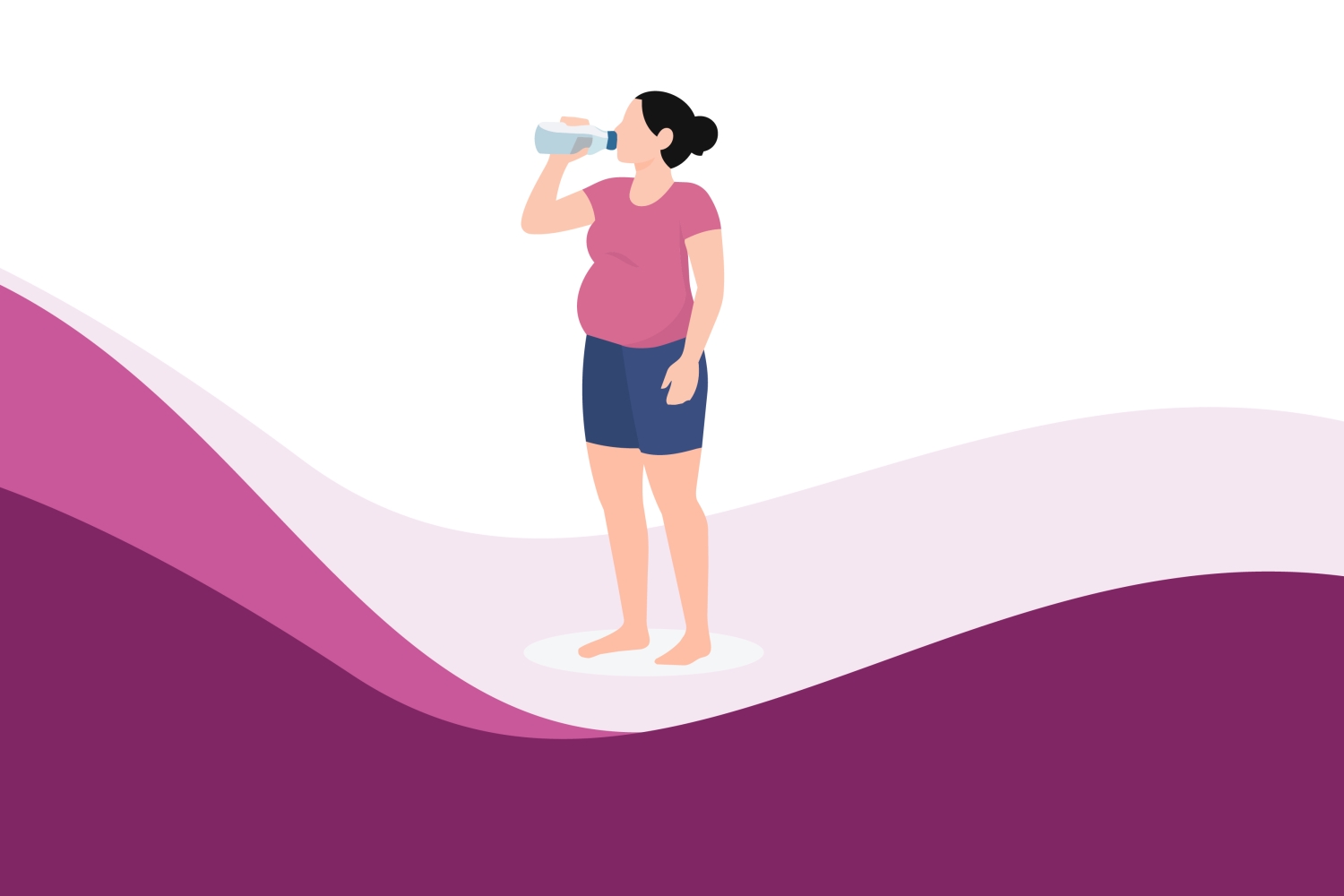
It can be helpful to spread fluid intake across the day rather than drinking large amounts at once. Keeping a water bottle nearby may encourage regular drinking without needing to think about it.
At the same time, healthcare professionals recommend limiting drinks that are high in sugar and being mindful of caffeine intake during pregnancy. The NHS advises keeping caffeine consumption below 200 mg per day, which is roughly equivalent to two mugs of instant coffee.
Recognising signs of dehydration
Dehydration does not always present dramatically. Early signs may include:
- darker urine
- dry mouth
- headaches
- tiredness
- dizziness
Urine colour can sometimes provide a simple indication of hydration status. Pale yellow urine generally suggests adequate hydration, while darker urine may indicate that the body needs more fluids.
If nausea or vomiting makes it difficult to keep fluids down, it is important to speak with a GP or midwife. Persistent vomiting can sometimes lead to dehydration and may require medical support.
Practical ways to stay hydrated
Maintaining good hydration does not usually require complicated strategies. Often it comes down to building small habits that make drinking fluids easier throughout the day.
Some simple approaches include:
- keeping a reusable water bottle nearby
- drinking a glass of water with meals
- sipping fluids regularly rather than waiting until feeling thirsty
- choosing water-rich foods such as fruit and vegetables
Foods like cucumbers, oranges, strawberries and soups can also contribute to daily fluid intake.
Hydration needs may increase slightly during warmer weather or after physical activity, so adjusting fluid intake accordingly can help maintain balance.
A small habit with meaningful benefits
While hydration may seem like a minor detail, it plays a supportive role in many aspects of health during pregnancy. Adequate fluid intake helps your body regulate important systems, maintain energy levels and support the environment in which your baby develops.
For people trying to conceive or navigating early pregnancy, staying hydrated is one of the simplest habits that can contribute to feeling more comfortable and prepared for the changes ahead.
Article information
References
Disclaimer
Important information
The information in this blog is provided for general information only. It is not intended to provide individual clinical advice, diagnosis or treatment and should not replace advice from your midwife, GP, maternity team, dentist or other appropriate healthcare professional.
Every pregnancy is different. If you have been given individual medical advice, please follow the guidance provided by your own healthcare team. If you have concerns about your health, your pregnancy or your baby’s wellbeing, seek appropriate medical advice rather than relying on information in this newsletter/blog etc.
Yorkshire Baby Scan is not an emergency service
Yorkshire Baby Scan is not an emergency or urgent medical service. Our scans and appointments are not a substitute for NHS maternity or emergency care.
If you have an urgent concern during pregnancy, contact your midwife or maternity unit, or the appropriate NHS service for your stage of pregnancy. If you are unsure where to seek help, contact NHS 111.
If you think you are experiencing a life-threatening emergency, call 999 immediately. (nhs.uk)
If you notice a change in your baby’s usual movements, do not wait for a scan appointment or until the next day. Contact your midwife or maternity unit immediately. (nhs.uk)
Information and review
We take reasonable steps to ensure that the information provided is accurate and based on current guidance at the time of publication. Healthcare guidance, legislation and available services can change, so information should be checked against current official guidance where appropriate.
Enjoyed this article or want to know more?
Book your scan today
See your baby’s first moments and create memories that last a lifetime. Book your private scan today and enjoy peace of mind from the very start of your journey.